
The Secret Behind Websites That Actually Get Found
A beautiful website may impress visitors, but if no one can find it, its potential remains untapped. That’s where SEO-friendly website development makes all the difference. It’s not just about ranking higher on search engines it’s about building a website that delivers value to both users and search engines from day one.
Many businesses invest heavily in website design but treat SEO as an afterthought. In reality, SEO starts during the development process. The structure, speed, mobile responsiveness, and code quality of a website all influence how search engines crawl, understand, and rank its pages.
Site speed is one of the biggest ranking factors. Users expect pages to load within seconds, and even a small delay can increase bounce rates. Optimized images, clean code, browser caching, and efficient hosting all contribute to a faster website. A fast-loading site not only improves user experience but also sends positive signals to search engines.
Mobile responsiveness is equally important. With most users browsing on smartphones, search engines prioritize websites that provide a seamless experience across all screen sizes. An SEO-friendly website automatically adapts its layout, navigation, and content, ensuring visitors enjoy the same quality experience whether they’re using a phone, tablet, or desktop.
Another key element is website architecture. A clear navigation menu, logical page hierarchy, and internal linking make it easier for visitors to explore your website while helping search engines understand the relationship between different pages. When users can quickly find what they’re looking for, they stay longer and that engagement can positively impact search performance.
Content also plays a crucial role, but even the best content needs a strong technical foundation. Proper heading structures, optimized URLs, meta titles, meta descriptions, image alt text, and schema markup all help search engines interpret your content more effectively. These technical details may not always be visible to users, but they significantly influence search visibility.
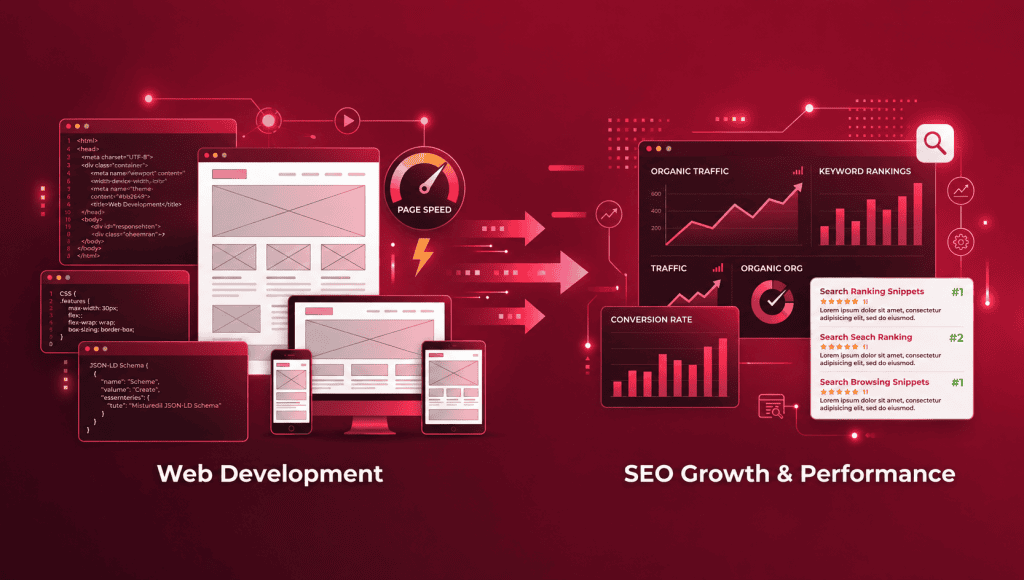
Content also plays a crucial role, but even the best content needs a strong technical foundation. Proper heading structures, optimized URLs, meta titles, meta descriptions, image alt text, and schema markup all help search engines interpret your content more effectively. These technical details may not always be visible to users, but they significantly influence search visibility.
Security is another important component of SEO-friendly development. Builds Trust with Visitors HTTPS encryption ensures the security of user data Search engines also favor secure websites, making SSL certificates a standard requirement rather than an optional feature.
Accessibility should never be overlooked. Websites designed with accessibility in mind are easier for everyone to use, including people with disabilities. Clear typography, keyboard-friendly navigation, descriptive links, and accessible design practices contribute to a better user experience while supporting long-term SEO performance.
Perhaps the biggest misconception is that SEO is a one-time task. Search algorithms evolve, user behavior changes, and competitors continue improving their websites. Regular performance monitoring, technical audits, content updates, and optimization are essential for maintaining strong rankings over time.
An SEO-friendly website isn’t built simply to attract traffic it is designed to convert visitors into customers. Every technical decision should support visibility, usability, and business growth.
In today’s competitive digital landscape, businesses that combine smart website development with SEO best practices create a powerful online presence. They don’t just appear in search results they build credibility, attract qualified leads, and establish long-term success.
A website should do more than exist. It should be discoverable, fast, user-focused, and built to grow alongside your business. That’s the true power of SEO-friendly website development.
Elevate your brand with Threezi Digital. Our SEO-optimised websites are engineered to boost visibility, increase enquiries, and maximise your return on investment..
Contact
FAQs
1. What is a website which is responsive on mobile devices?
A website that is simple to view and reached by adapting to fit any screen size.
2. Why will mobile responsiveness get so important in 2025?
The majority of consumers use their mobile devices to browse. It increases digital competitiveness, improves user experience, boosts conversions, and improves SEO.
3.What affect does mobile responsiveness have on SEO?
Google applies mobile first indexing to give sites that are mobile-friendly higher rankings.
4. Does a website that is mobile-friendly load faster?
Yes. It is designed to load faster on mobile networks.
5. Can it boost leads or sales?
In fact, better usability raises conversions and lesser drop-off rates.
6. Is it similar to having a mobile application?
No. While an app is different and optional, a responsive website adjusts to all devices.
7. Do small businesses need websites that are responsive to mobile devices?
Yes. It boosts visibility, promotes more customer interactions, and creates trust.